
The Algorithmic Handshake: How New Technologies Are Revolutionizing Donor Recognition and Stewardship
The Algorithmic Handshake: How New Technologies Are Revolutionizing Donor Recognition and Stewardship
Introduction
The Digital Transformation of Gratitude: How Nonprofits are Revolutionizing Donor Relations Through Technology
A new era of philanthropic engagement is dawning, as charities, nonprofit organizations (NPOs), and non-governmental organizations (NGOs) worldwide are increasingly harnessing the power of emerging technologies to cultivate, recognize, and steward their donors. This report details the innovative ways these organizations are leveraging artificial intelligence (AI), chatbots, personalized media, and other digital tools to create more meaningful and impactful relationships with their supporters. Through a comprehensive analysis of current trends and in-depth case studies, it is evident that technology is not merely automating thank-yous but is fundamentally reshaping the landscape of donor recognition into a more personalized, transparent, and engaging experience.
The traditional handwritten thank-you note, while still holding value, is now being supplemented and, in some cases, surpassed by a suite of sophisticated technological solutions designed to cater to the expectations of a digitally-native donor base. These innovations are enabling nonprofits to express gratitude at scale, provide tangible evidence of impact, and foster a sense of community and partnership with their contributors.
Artificial Intelligence: The Engine of Personalized Stewardship
Artificial intelligence is at the forefront of this transformation, empowering nonprofits to move beyond generic, one-size-fits-all donor communication. By analyzing vast datasets, AI algorithms can segment donors with remarkable precision, allowing for highly personalized outreach and recognition.
AI-powered donor segmentation enables organizations to tailor their communications based on a donor's giving history, engagement level, communication preferences, and even their inferred interests. This allows for the delivery of bespoke thank-you messages, impact reports, and future appeals that resonate on an individual level. For instance, a donor who has consistently funded environmental projects can receive targeted updates on reforestation efforts, complete with personalized statistics on the number of trees planted thanks to their specific contributions. This level of personalization fosters a deeper connection and reinforces the donor's sense of individual impact.
Furthermore, AI is being used to predict donor behavior, identifying individuals who are likely to become major contributors or those who are at risk of lapsing. This predictive analysis allows fundraising teams to proactively engage these donors with tailored stewardship efforts, such as personalized invitations to exclusive events or a direct outreach from a senior staff member.
Chatbots: 24/7 Gratitude and Engagement
Chatbots have emerged as a powerful tool for providing immediate and interactive donor support and recognition. These AI-driven conversational agents can be integrated into a nonprofit's website or social media channels to offer round-the-clock assistance, answer frequently asked questions, and even process donations.
A prime example of a nonprofit leveraging this technology is UNICEF's U-Report, a global messaging platform that engages young people on a variety of issues. While primarily a tool for social engagement, the principles of U-Report are being adapted for donor relations. Chatbots can guide donors through the giving process, provide instant acknowledgments of their contributions, and answer questions about how their funds will be utilized. This immediate feedback loop is crucial in an age of instant gratification, assuring donors that their contribution has been received and is valued.
More sophisticated chatbots can also be programmed to deliver personalized thank-you messages and impact stories directly within the chat interface. For instance, a donor could interact with a bot that shares a short video or a series of images from the field, directly illustrating the impact of their recent gift.
Personalized Video Messaging: A Human Touch at Scale
Personalized video has proven to be a highly effective tool for conveying heartfelt gratitude and building a strong emotional connection with donors. Platforms now exist that allow nonprofits to create and send personalized thank-you videos to a large number of supporters with relative ease.
These are not generic, mass-produced videos. Instead, they often feature a staff member, volunteer, or even a beneficiary personally addressing the donor by name and referencing their specific contribution. This seemingly small act of personalization can have a profound impact, making the donor feel seen and appreciated as an individual. The use of authentic, unscripted moments in these videos further enhances their emotional resonance.
Some organizations are taking this a step further by creating "impact videos" that are personalized to the donor. For example, a nonprofit focused on animal welfare could send a video of a specific animal that a donor's contribution has helped to rescue and care for. This direct line of sight to the positive outcome of their donation is a powerful stewardship tool that fosters long-term loyalty.
Immersive Technologies: Experiencing the Impact Firsthand
Virtual reality (VR) and augmented reality (AR) are emerging as groundbreaking tools for donor recognition, offering an unparalleled opportunity for supporters to experience the impact of their contributions in a deeply immersive way.
Nonprofits are creating VR films that transport donors to the communities they are supporting, allowing them to "walk" through a newly built school, "witness" a clean water well in operation, or "meet" the individuals whose lives they have changed. This visceral experience can evoke a powerful empathetic response and create a lasting impression that a traditional impact report simply cannot replicate.
AR is also being used creatively for donor recognition. For instance, a nonprofit could send a donor a thank-you card that, when viewed through a smartphone app, triggers an augmented reality experience, such as a 3D model of a project they funded or a video message from a field worker.
Transparency and Tangible Recognition: The Role of IoT and Blockchain
In an era where donors are increasingly demanding transparency and accountability, technologies like the Internet of Things (IoT) and blockchain are providing innovative solutions for donor stewardship.
Charity: Water, a nonprofit dedicated to bringing clean drinking water to developing countries, has been a pioneer in this area. They have installed sensors on their water projects that monitor their functionality in real-time. This data is then made available to donors, allowing them to see the ongoing impact of their contributions and be assured that their investment is being effectively utilized. This level of transparency builds immense trust and confidence.
Blockchain technology, with its immutable and transparent ledger, is also beginning to be explored for donor recognition. By recording donations on a blockchain, nonprofits can provide donors with a permanent and verifiable record of their giving. This can take the form of a digital certificate or a "giving footprint" that showcases a donor's philanthropic journey. While still in its nascent stages, the potential for blockchain to revolutionize transparency in the nonprofit sector is significant.
Gamification: Making Gratitude Fun and Interactive
Gamification, the application of game-design elements in non-game contexts, is being used by nonprofits to make donor engagement and recognition more interactive and enjoyable. This can include a variety of techniques, from points and badges for completing certain actions (such as sharing a campaign on social media or making a recurring donation) to leaderboards that publicly recognize top fundraisers and donors.
For example, a nonprofit could create a "giving challenge" where donors unlock different levels of recognition and rewards as they reach certain fundraising milestones. This can create a sense of friendly competition and encourage donors to become more actively involved in the organization's mission. By turning the act of giving and engagement into a fun and rewarding experience, nonprofits can foster a more vibrant and committed community of supporters.
The Future of Donor Relations is Here
The integration of new technologies is not merely about modernizing the back-office functions of nonprofit organizations. It represents a fundamental shift in how these organizations build and nurture relationships with their donors. By embracing AI, chatbots, personalized media, immersive technologies, and other digital tools, charities, NPOs, and NGOs are moving towards a future where donor recognition is more personalized, transparent, engaging, and ultimately, more effective. The organizations that successfully navigate this digital transformation will be best positioned to thrive in the increasingly competitive philanthropic landscape, building a loyal and dedicated base of supporters who feel truly valued and connected to the causes they champion. The digital age of gratitude has arrived, and its impact on the world of philanthropy is only just beginning to be realized.
Environmental Scan and Literature Review
The Evolution of Gratitude in Philanthropy
The practice of philanthropy is built upon a foundation of gratitude, a reciprocal acknowledgment that strengthens the bond between a cause and its supporters. For centuries, the expression of this gratitude — donor recognition — has been a cornerstone of fundraising. However, the methods of this expression are undergoing a transformation as profound as any in the history of giving. The sector is moving away from conventional, static gestures and toward dynamic, hyper-personalized experiences driven by technology. This report provides a comprehensive analysis of this new era, detailing how charities, nonprofit organizations (NPOs), and non-governmental organizations (NGOs) are leveraging artificial intelligence (AI), conversational bots, personalized video, and immersive realities to recognize, thank, and steward their donors. It explores the strategic application of these tools, examines their real-world impact through global case studies, and provides a framework for their ethical and effective implementation.
From Inscribed Walls to Interactive Experiences
The history of donor recognition is a long and venerable one, stretching from medieval benefactor books that immortalized givers with illuminated portraits to the modern practice of engraving names on physical donor walls.[1] These traditional methods, including plaques, named programs, and mentions in annual reports, have served a critical function: they offer public acknowledgment, affirming a donor's decision to give and building a sense of community around a shared mission.[3] Public recognition taps into a fundamental human motivation related to social reputation; seeing one's name on a wall provides social reinforcement of one's identity as a kind and generous person, an "ego stroke" that validates the act of giving.[1]
Yet, the digital revolution has ushered in a paradigm shift. The contemporary landscape of donor recognition is increasingly characterized by interactive, personal, and immediate experiences. Digital donor walls on websites, social media shout-outs, and personalized thank-you emails have become standard practice, reflecting a move from physical to digital acknowledgment.[3] This evolution is not merely a technological update but a response to a deeper change in donor psychology and expectations. The modern philanthropic environment mirrors broader consumer trends, where personalization is no longer a luxury but an expectation.[8] Donors, particularly those who have grown up in a digital-first world, seek a more personal and emotional return on their investment—a direct, meaningful connection to the impact they have created.
This shift from public status to personal experience is critical. While public recognition remains relevant, especially for major corporate and individual donors, research suggests it can be a surprisingly blunt instrument. For smaller, more modest donations, public recognition can create ambiguity in the donor's mind about their own motivation — are they giving for altruistic reasons or for the recognition itself? This internal conflict can undermine the "self-signal of altruism" and, in some contexts, actually decrease giving rates.[10] In contrast, new technologies excel at facilitating private, one-to-one communication that reinforces a donor's intrinsic motivations. A personalized video or a thoughtful, data-informed email makes the donor feel uniquely seen and valued for their specific contribution, fostering a deeper, more resilient connection to the cause.[11] Nonprofits that fail to grasp this cultural shift and rely solely on older, public-facing methods risk failing to engage a new generation of donors who value personal connection over public plaudits.
The Strategic Imperative of Stewardship
Effective donor recognition is not an isolated act but the most visible component of a broader, more strategic discipline: donor stewardship. Stewardship is the comprehensive, long-term practice of nurturing relationships with supporters to make them feel valued and connected to the organization.[13] Its goals extend far beyond a simple thank-you; a well-executed stewardship strategy is designed to improve donor retention, increase the lifetime value of supporters, build unwavering loyalty, and enhance the organization's overall reputation.[14] The data underscores its importance: the longer a donor stays with a nonprofit, the more valuable they become, with the average donor giving 240% more in their fifth year than in their first.[13]
Technology's role in this process is transformative. It serves as a strategic enabler for every stage of the donor cultivation cycle: Identification (finding the right prospects), Cultivation (building the relationship), Solicitation (making the ask), and Stewardship (recognizing the gift and continuing engagement).[13] A critical best practice in stewardship is the promptness of acknowledgment; experts recommend thanking a donor within 48 to 72 hours of receiving a gift.[3] Technology, through automated receipts and triggered communication workflows, makes this level of responsiveness achievable at scale, ensuring that no donor's generosity goes unacknowledged.
Thesis: Technology as an Amplifier of Human Connection
A common apprehension surrounding the integration of technology, particularly AI, into fundraising is the fear that it will depersonalize relationships, replacing genuine human interaction with cold, automated efficiency. This report advances the contrary thesis: when implemented thoughtfully and strategically, new technologies act as powerful amplifiers of human connection. They are not a substitute for the human touch but a sophisticated tool that allows fundraisers to deliver the right message, through the right channel, at the right time, to every donor.[13] By handling the complexities of data analysis, segmentation, and routine communication, these technologies free up nonprofit professionals to focus on what they do best: building authentic, empathetic, and lasting relationships. The following sections will demonstrate how this "algorithmic handshake" — the fusion of human empathy and technological precision — is creating a new frontier in donor stewardship, one that is more personal, impactful, and sustainable than ever before.
Artificial Intelligence: The Engine of Hyper-Personalized Donor Relations
Artificial intelligence is fundamentally reshaping donor stewardship, transforming it from a reactive, often manual process into a proactive, data-driven discipline. By analyzing vast datasets to identify patterns and predict behavior, AI provides nonprofits with an unprecedented ability to understand and engage their supporters on an individual level. This section examines the dual capabilities of AI — predictive and generative — and explores how these technologies are being embedded into fundraising platforms to create a new standard of hyper-personalized donor relations.
Predictive AI: From Segmentation to Propensity Modeling
Predictive AI, a subset of machine learning, is the engine that drives strategic donor engagement. It processes historical and real-time data to forecast future donor actions, allowing organizations to allocate their resources with maximum efficiency and impact.
Advanced Donor Segmentation
Traditional donor segmentation often relies on broad categories, or tiers, based on donation amounts (e.g., Friends: $100–$499).[3] While useful, this approach provides only a one-dimensional view of a supporter. AI enables a far more sophisticated and granular approach known as hyper-segmentation. Machine learning algorithms can analyze a multitude of variables simultaneously, including a donor's complete giving history, frequency of donations, engagement with email and social media campaigns, event attendance, volunteer activity, and even inferred interests based on content consumption.[13]
This multidimensional analysis allows nonprofits to create highly specific donor personas and tailor communications that resonate with each group's unique motivations. For instance, an AI model might identify a segment of "environmentally-focused, mid-level donors who respond to video content but have not given in six months." This level of insight enables the creation of a targeted re-engagement campaign featuring a personalized video about a recent conservation success, a strategy far more likely to succeed than a generic, mass-market appeal.[21]
Propensity Modeling
Beyond segmentation, predictive AI enables propensity modeling, a powerful technique that calculates the statistical likelihood of a donor taking a specific future action. Specialized AI fundraising tools, such as DonorSearch Ai and Dataro, analyze an organization's entire dataset to assign individual scores to each donor for various key behaviors.[20] These models can predict:
Likelihood to Give: Identifying which individuals in a large database are most likely to respond to a specific fundraising appeal, such as a direct mail campaign or a telethon.
Likelihood to Make a Major Gift: Pinpointing mid-level donors who exhibit the characteristics and capacity for significant philanthropic investment, allowing major gift officers to prioritize their cultivation efforts.
Likelihood to Convert to Recurring Giving: Identifying one-time donors who are strong candidates for a monthly giving program, a crucial step for building a sustainable revenue base.
Likelihood to Churn (Lapse): Flagging at-risk donors who are likely to cease giving, enabling the organization to intervene with targeted stewardship and retention efforts before they are lost.
This predictive capability allows fundraising teams to move from intuition-based decision-making to a data-informed strategy, focusing their limited time and budget on the opportunities with the highest potential return.[22]
Case Study: Greenpeace
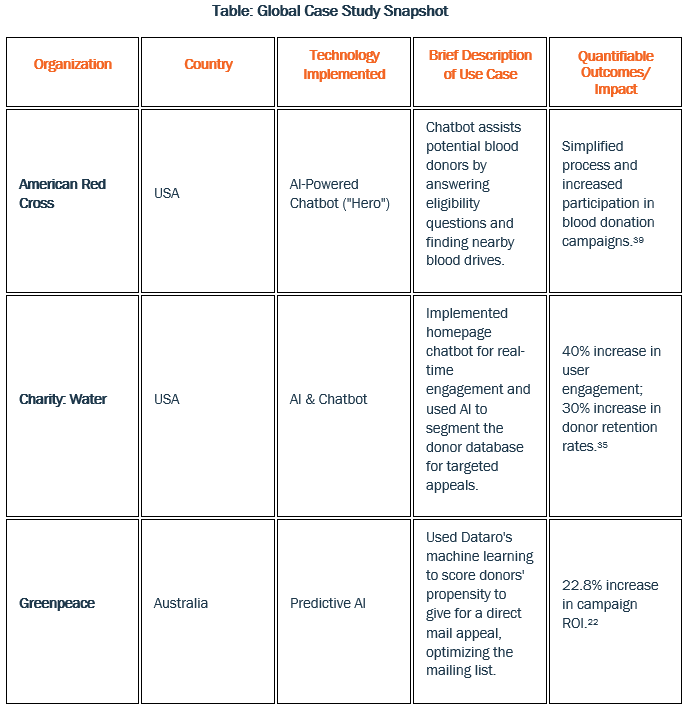
The experience of Greenpeace Australia Pacific (GPAP) with the AI platform Dataro provides a compelling illustration of propensity modeling in action. For a direct mail appeal, GPAP traditionally used RFM (Recency, Frequency, Monetary) analysis to select donors for their mailing list. In partnership with Dataro, they applied a machine learning model to the same donor pool. The AI analyzed GPAP's entire history of fundraising and engagement data to identify deep patterns and assign each donor a propensity score indicating their likelihood of giving to that specific appeal.[22]
The results were striking. The AI model identified a cohort of high-propensity donors that the traditional RFM method had missed. Conversely, it also flagged many donors on the RFM list as having a low probability of giving. By using the AI-generated list, Greenpeace was able to target donors more effectively and avoid the cost of mailing to individuals who were unlikely to respond. This optimized approach led to a 22.8% increase in the campaign's return on investment (ROI), demonstrating the direct financial benefit of predictive analytics.[22]
Generative AI: Crafting Authentic Communications at Scale
While predictive AI answers the questions of who and when to contact, generative AI addresses the what — the content of the communication itself. Powered by Large Language Models (LLMs), generative AI tools are revolutionizing how nonprofits create written and visual content, enabling them to produce personalized and compelling messages at an unprecedented scale.
Personalized Correspondence
Tools like ChatGPT, Google's Gemini, and nonprofit-specific platforms such as Momentum (trained on sector-specific data) can draft a wide array of donor communications in seconds.[20] This includes:
Thank-You Messages: Generating personalized thank-you emails that reference the donor's name, gift amount, the specific campaign they supported, and their past involvement.[21]
Social Media Content: Creating engaging posts for platforms like Facebook and Instagram, including captions that recognize corporate sponsors or highlight donor impact stories.[26]
Newsletter Articles and Blog Posts: Drafting articles that feature a "donor of the month" or provide updates on programs that specific donor segments have supported.[11]
The strategic advantage of generative AI lies in its ability to overcome the "blank page problem" and produce a high-quality first draft. However, best practice dictates that this AI-generated content must be reviewed and refined by a human. This crucial step ensures the final message aligns with the organization's unique voice and values, maintains factual accuracy, and possesses a genuine, authentic tone that resonates emotionally with the recipient.[21]
Impact Reporting
One of the most powerful applications of generative AI is in transforming raw data into compelling narratives of impact. Donors increasingly want to know not just that their gift was received, but how it made a difference.[11] AI can synthesize programmatic data (e.g., "we served 5,000 meals last month") with a donor's specific contribution details to generate personalized impact reports. Natural Language Generation (NLG) technology can turn metrics and data points into captivating stories, allowing an organization to share the transformative effect of each individual donation.[27] For example, instead of a generic report, a donor might receive a personalized update that reads, "Because of your generous gift of $50 last month, you helped provide 10 hot meals to families in your community. Thank you for making this possible." This level of specific, personalized feedback deepens the donor's connection and affirms the value of their support.
AI-Powered Platforms and Integrated Systems
The true power of AI is realized when it is seamlessly integrated into the core technology stack of a nonprofit, such as its Customer Relationship Management (CRM) and online fundraising platforms. This integration enables the automation of sophisticated, data-driven stewardship workflows.
Smart Targeting and Ask Amounts
Modern online donation platforms like Fundraise Up embed AI directly into the giving experience. Their algorithms analyze billions of data points from past donations — using non-personally identifiable information (non-PII) to protect privacy — along with a user's real-time behavior on the site (such as time spent on a page and device used).[19] Based on this analysis, the platform dynamically suggests optimized "ask string" amounts (e.g., $50, $100, $250) for each individual visitor. This approach is grounded in academic research which found that even small adjustments to default donation amounts can have a sizable effect on both the likelihood of giving and the amount given.[29] By tailoring the ask to what the data suggests a particular user is likely to give, these platforms significantly increase donation conversion rates.
Automated Stewardship Journeys
When integrated with a CRM, AI can trigger and manage entire communication sequences, creating personalized stewardship journeys for different donor segments. For example, a nonprofit can design an automated welcome series for all first-time donors. When a new donation is registered, the system automatically initiates the sequence[15]:
Day 1: An immediate, personalized thank-you email is generated and sent, confirming the gift and expressing gratitude.
Day 3: A follow-up email provides an overview of the nonprofit's mission and major achievements, reinforcing the donor's decision to support a high-impact organization.
Day 7: Another email delivers a specific update on the impact of the donor's gift, perhaps with a short story or beneficiary testimonial.
Day 14: The donor receives an email outlining other ways to get involved, such as volunteer opportunities or advocacy campaigns, inviting them into a deeper relationship.
This automated yet highly personalized process ensures that every new donor receives consistent, meaningful engagement, building a strong foundation for a long-term relationship from the very first interaction.
The integration of AI into fundraising operations represents a fundamental shift. Traditionally, donor data has often been siloed across different systems — financial data in one, event attendance in another, and volunteer records elsewhere.[30] This fragmentation makes it difficult to see the full picture of a supporter's engagement. Recognition, therefore, is often tied solely to a financial transaction. AI excels at breaking down these silos, integrating and analyzing diverse datasets to construct a holistic profile of each supporter.[22] An AI-powered system can recognize that a person who just donated $100 also volunteered for 20 hours at the annual gala and actively shares the organization's content on social media.
This synthetic understanding allows for a more profound form of recognition that acknowledges the donor's entire contribution to the mission. A thank-you communication can now be elevated from "Thank you for your gift" to "Thank you for your recent gift of $100. Your financial support, combined with the 20 hours you volunteered at our gala, has been instrumental in our success".[3] This subtle but powerful change reframes the interaction. The organization is no longer just thanking a "donor" for a transaction; it is recognizing a "partner" for their multifaceted commitment. This validation of a supporter's holistic involvement deepens the relationship, fosters exceptional loyalty, and makes future, potentially larger, contributions more likely, as the individual feels fully seen and valued.[15] In this way, AI transforms stewardship from a post-transactional function into a continuous, deeply relational process.
Conversational AI: Engaging Donors in Real-Time with Chatbots and Voice Bots
As nonprofits navigate an increasingly digital world, the first point of contact for many donors, volunteers, and beneficiaries is the organization's website or social media page. Conversational AI, in the form of chatbots and voice bots, has emerged as a critical technology for managing these initial interactions. These automated agents are becoming the frontline of donor communication, providing immediate, 24/7 engagement and support while creating significant operational efficiencies and freeing human staff to focus on higher-value relationship-building.
The Dual Role of Chatbots: Efficiency and Engagement
The primary value proposition of conversational AI in the nonprofit sector is twofold: it dramatically increases operational efficiency while simultaneously enhancing the quality and immediacy of donor engagement.
24/7 Availability and Instant Support
Unlike human staff, chatbots are available around the clock to assist website visitors and social media followers. They can provide instant answers to a wide range of frequently asked questions (FAQs), such as[33]:
"How can I make a donation?"
"Is my donation tax-deductible?"
"Where can I find my donation receipt?"
"What are the details for your upcoming fundraising event?"
"How can I sign up to volunteer?"
By providing this information on-demand, chatbots improve the user experience, reduce potential donor frustration, and can decrease response times from hours or even days to mere seconds.[35] This immediacy is crucial in a digital environment where users expect instant gratification and may abandon a donation or inquiry if they cannot find information quickly.
Freeing Human Resources
The automation of routine inquiries has a profound impact on staff workload. Nonprofit teams, often operating with limited resources and personnel, can spend a significant amount of time on repetitive administrative tasks.[36] By fielding the majority of these common questions, chatbots free up staff to concentrate on more complex, strategic, and mission-critical activities.[25] This allows development professionals to spend less time on administrative support and more time cultivating relationships with major donors, planning fundraising campaigns, and analyzing program impact. Research indicates that AI chatbots can save customer service teams an average of 330 hours per month, a substantial gain in productivity for any organization.[25]
Types of Chatbots and Their Applications
The sophistication and capabilities of chatbots can vary significantly. Nonprofits can choose from simpler, more structured bots to advanced, AI-driven conversational agents, depending on their specific needs and resources.
Rule-Based Chatbots
Rule-based chatbots operate on a predefined script or decision tree. They typically present users with a menu of options (e.g., "Donate," "Volunteer," "Learn More") and guide them through a structured conversation based on their selections.[33] These bots are relatively easy and inexpensive to set up using platforms like Botsify or Chatfuel for Facebook Messenger. While their capabilities are limited — they cannot answer questions outside of their pre-programmed script — they are highly effective for straightforward tasks like directing users to the correct webpage or guiding them through a simple donation process. The primary drawback is that if a user's query does not match one of the predefined options, the bot cannot help, highlighting the need for a clear handoff to a human agent.[33]
AI-Powered Chatbots
More advanced chatbots are powered by artificial intelligence, specifically Natural Language Processing (NLP) and machine learning. These bots can understand and interpret open-ended questions typed by a user in natural language, much like a human would.[33] Their capabilities are far more extensive [34]:
Complex Query Handling: They can understand context and nuance, providing relevant answers to a much wider range of inquiries.
Personalization: When integrated with a nonprofit's CRM, an AI chatbot can access a donor's history to provide personalized responses. For example, it could recognize a recurring donor and thank them for their ongoing support before answering their question.
Intelligent Escalation: A well-designed AI chatbot can recognize the limits of its knowledge or detect user frustration. When this happens, it can seamlessly transfer the conversation to a live human agent, often providing the agent with a transcript of the chat for context.[33]
Global Case Studies in Chatbot Implementation
Leading nonprofit organizations around the world have successfully implemented chatbots to enhance their fundraising and engagement efforts, providing powerful models for the rest of the sector.
Charity: Water: This organization is a prime example of leveraging conversational AI for donor engagement. By integrating a chatbot on its website, Charity: Water provides real-time responses and personalized experiences for its supporters. The bot can handle inquiries about the organization's mission, provide updates on specific water projects, and guide users through the donation process. This strategy has not only improved interaction but has also led to a quantifiable 40% increase in user engagement and a 30% rise in donor retention rates.[35]
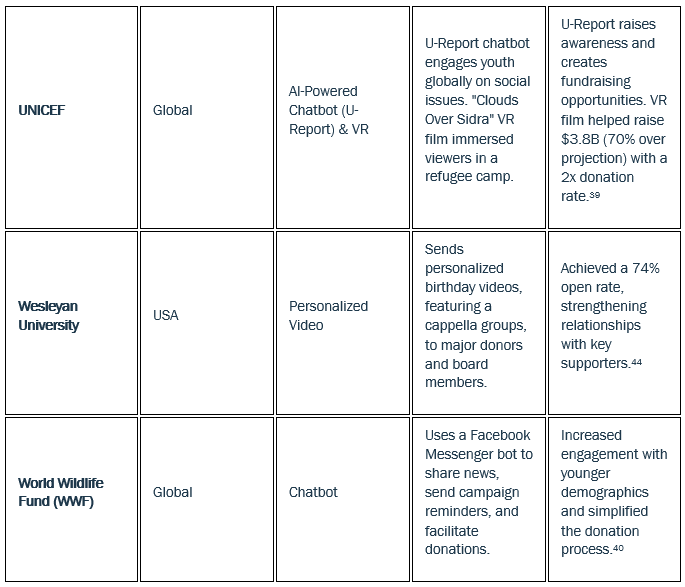
UNICEF (U-Report): UNICEF's U-Report is a globally recognized chatbot initiative that operates on platforms like Facebook Messenger and WhatsApp. It is designed to engage with young people, gathering their opinions on pressing social issues through polls and surveys. While its primary function is engagement and data collection, this interaction raises awareness of UNICEF's work and creates a pathway for future support and fundraising opportunities from an engaged global community.[39]
American Red Cross ("Hero"): The Red Cross developed an AI-powered chatbot named "Hero" specifically to support its blood donation drives. "Hero" assists potential donors by answering common questions about eligibility criteria, providing information on the donation process, and helping users find and schedule appointments at nearby blood drives. By simplifying the process and removing barriers to entry, the chatbot has been instrumental in increasing participation in these life-saving campaigns.[39]
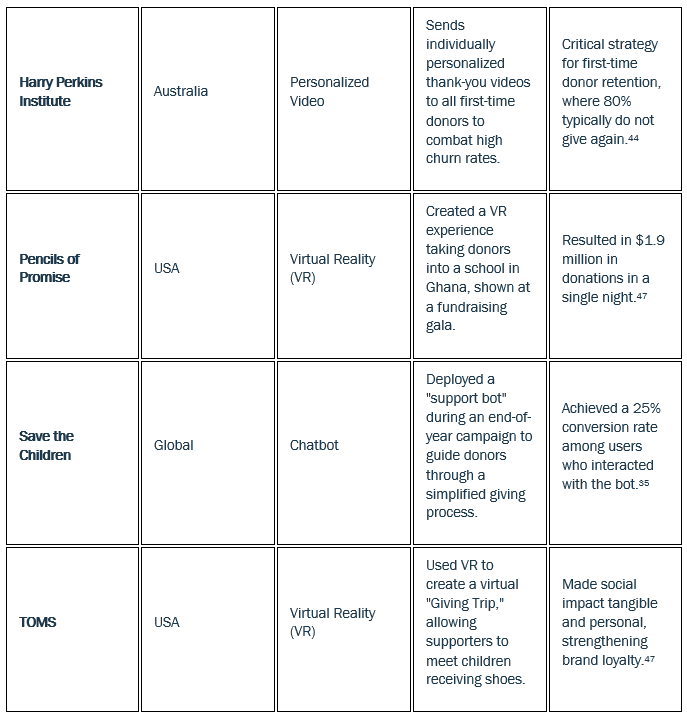
Save the Children: During a critical end-of-year fundraising campaign, Save the Children deployed a "support bot" to guide donors through a simplified and streamlined giving process. The bot's ability to provide immediate assistance and answer questions in real-time proved highly effective, resulting in an impressive 25% conversion rate for users who interacted with it.[35]
World Wildlife Fund (WWF): To connect with a younger, more digitally native audience, the WWF utilizes a chatbot integrated with Facebook Messenger. The bot shares engaging content, such as news and facts about endangered species, sends timely reminders about advocacy and fundraising campaigns, and allows supporters to make donations directly within the Messenger platform. This approach has successfully increased engagement on social media and simplified the fundraising process for a key demographic.[27]
The evolution of chatbots from simple FAQ tools into sophisticated components of the donor relations workflow marks a significant strategic development. Initially adopted for efficiency, these bots are now functioning as intelligent "triage systems" for donor stewardship. The bot serves as the first point of contact, capable of instantly resolving the vast majority — often around 80% — of routine inquiries without human intervention.[33] However, their true strategic value lies in their ability to do more than just answer questions. Through integration with CRM systems, they can access donor history and personalize interactions, recognizing a major donor and responding with a different level of service than they would to an anonymous visitor.[34]
Furthermore, advanced bots can be programmed to identify "trigger" words, phrases, or sentiments — such as "unhappy," "confused," "complaint," or "large gift" — that signal the need for immediate human attention.[33] This creates a highly efficient, tiered support system. Tier 1, the bot, handles the high volume of simple interactions. Tier 2, the human staff, receives a pre-qualified and prioritized stream of the most critical conversations, complete with chat transcripts for immediate context. This third-order effect is transformative: the chatbot doesn't just save time; it qualifies and prioritizes the use of human time. This ensures that the organization's limited and valuable staff resources are deployed with maximum strategic impact, allowing them to focus on the complex, nuanced, and empathetic relationship-building that matters most, rather than being consumed by administrative queries. It effectively elevates the role of a development professional from a reactive problem-solver to a proactive relationship manager.
The Power of Personalized Video: Creating Scalable, Human-Centric Connections
In a digital landscape saturated with text-based communication, personalized video has emerged as a uniquely powerful tool for nonprofits to cut through the noise, capture donor attention, and forge genuine emotional connections. By combining the scalability of digital platforms with the authenticity of a face-to-face message, personalized video is proving to be one of the most effective strategies for thanking donors, demonstrating impact, and ultimately, improving long-term retention.
The Unmatched Impact of Video
The effectiveness of video as a communication medium is supported by a wealth of compelling data. It engages viewers on a deeper cognitive and emotional level than text alone, leading to significantly higher engagement and message retention.
Engagement and Retention Metrics
The results from nonprofits implementing personalized video strategies are nothing short of remarkable. Platforms specializing in this technology report that personalized video messages can [42]:
Achieve open rates as high as 61%, far surpassing the industry average for standard nonprofit emails.
Increase donor retention by up to 15%, a critical metric for long-term sustainability.
Raise 74% more funds in appeals compared to traditional email campaigns.
These outcomes are driven by the way the human brain processes visual information. Research shows that viewers retain 95% of a message when they watch it in a video, compared to a mere 10% when reading it in text. Furthermore, the brain processes video content 60,000 times faster than text, making it a highly efficient and impactful medium for conveying information and emotion.[43]
Psychological Impact
Beyond the metrics, video has a profound psychological impact. It adds a human face to an organization that might otherwise seem abstract, fostering a sense of trust and authenticity.[12] A personalized thank-you video feels like a genuine, one-to-one conversation, not a mass-produced communication. This personal touch makes donors feel seen, valued, and appreciated, strengthening their emotional bond with the cause and affirming their decision to give.[11] Holding up a whiteboard with the donor's name, for example, instantly proves that the video was created specifically for them, breaking through the clutter of generic templates and creating a memorable "wow" moment.[12]
Platforms and Technologies
The rise of personalized video has been enabled by a new generation of software platforms designed specifically for the needs of fundraisers. These tools make it possible for nonprofits of any size to create and distribute high-quality, personalized video messages at scale.
Tools of the Trade
Leading platforms in this space include ThankView, CauseVid, Gravyty, and Idomoo.[12] These integrated solutions provide a suite of features that streamline the entire video creation and distribution process:
Easy Video Management: They offer user-friendly tools to collect, upload, edit, and add captions to videos, often accessible via mobile apps so staff can record messages from anywhere.[42]
Custom Branding: Nonprofits can create fully branded video landing pages, emails, and text messages, ensuring a seamless and professional experience for the recipient.[42]
CRM Integration: Seamless integration with major nonprofit CRM systems allows for the automation of video sends based on smart triggers (e.g., a first-time donation) and the centralization of engagement data.[43]
Advanced Analytics: These platforms provide detailed metrics on open rates, click-through rates, and video view duration, allowing organizations to track the performance of their campaigns and refine their strategies.[45]
Scalable Personalization
The core innovation of these platforms is their ability to deliver personalization at scale. Rather than requiring fundraisers to record thousands of entirely unique videos, they facilitate a hybrid approach. An organization can produce a single, high-quality "base" video — for instance, featuring a message from the CEO or a tour of a program site. This base video can then be combined with a short, individually recorded clip where a staff member personally thanks the donor by name. This method, along with features that dynamically insert personalized text or images into the video, creates a powerful one-to-one feel without an overwhelming production burden.[12]
Creative Use Cases and Best Practices
Nonprofits are deploying personalized video across the entire donor lifecycle, using it as a versatile tool for stewardship, cultivation, and solicitation. The only limit is the organization's creativity.[12]
Thanking First-Time Donors: This is perhaps the most critical application of personalized video. With data showing that as many as 8 out of 10 first-time donors never make a second gift, the initial thank-you is a crucial touchpoint for retention.[44]
Harry Perkins Institute of Medical Research in Australia has made it a standard practice to send individually personalized thank-you videos to every single first-time donor, recognizing the importance of making a strong, personal connection from the very beginning.[44]
Celebrating Milestones and Anniversaries: Non-ask communications are essential for building relationships. Wesleyan University excels in this area by sending personalized birthday videos to its major donors and board members. These videos, which often feature a song from one of the university's renowned a cappella groups, are a delightful surprise that strengthens the bond with key supporters. This strategy has proven highly effective, achieving an extraordinary 74% open rate.[44]
Giving Day and Event Follow-Up: The high volume and fast pace of giving days can make personalized follow-up challenging. The nonprofit Save Our Youth overcame this by having staff record and send thank-you videos in real-time to each person who donated during their giving day. This immediate and personal acknowledgment made the experience memorable and helped donors feel their contribution was instantly valued.[44]
Impact Updates and Storytelling: Video is an unparalleled medium for showing, not just telling, the impact of a donation. A short video filmed on-location—showcasing students in a newly built classroom, a veterinarian caring for a rescued animal, or a community enjoying clean water from a new well—makes a donor's contribution tangible and emotionally resonant. These updates provide concrete proof of impact and reinforce the value of continued support.[12]
The strategic value of personalized video extends far beyond simply being a novel way to say thank you. Its primary function is to act as a powerful tool for preemptively neutralizing donor churn at the most critical drop-off points in the donor journey. The data is clear: the period immediately following a first gift is the moment of greatest vulnerability, where the majority of donors are lost.[44] This is where personalized video can be deployed as a calculated, strategic intervention.
The first acknowledgment a donor receives is a pivotal moment that affirms their decision to give and sets the tone for the future relationship.[11] A standard, automated email receipt feels transactional and impersonal. In contrast, receiving an unexpected, personalized video message creates a memorable "wow" moment.[42] It shatters the donor's expectation of a generic digital interaction and makes them feel genuinely seen and appreciated as an individual. This powerful emotional experience builds an immediate and strong connection, significantly increasing the likelihood that they will give again. Therefore, the return on investment for personalized video technology should not be measured solely by the immediate goodwill it generates. It is a targeted, strategic investment in long-term value. By applying this high-touch experience at the most vulnerable point in the donor lifecycle, nonprofits can significantly increase donor retention rates [42] and, consequently, the lifetime value of their supporters. In this context, the personalized video is not just a thank-you note; it is a highly effective churn-reduction tool.
Immersive Realities: Fostering Empathy and Impact through VR and AR
At the cutting edge of technological innovation in philanthropy are immersive realities: Virtual Reality (VR) and Augmented Reality (AR). These technologies offer an unprecedented ability to create deeply engaging and emotionally resonant experiences, connecting donors to an organization's mission in ways that were previously unimaginable. By moving beyond traditional storytelling to what can be described as "story-living," VR and AR are being explored as powerful tools to foster empathy, deepen understanding, and inspire greater levels of giving.
VR as the "Ultimate Empathy Machine"
Virtual Reality, in particular, has been hailed as the "ultimate empathy machine" for its unique capacity to generate a profound sense of presence and emotional connection.[47]
Transporting the Donor
Unlike any other medium, VR can virtually transport an individual to another place and time. By donning a headset, a donor at a fundraising gala in a major city can be instantly immersed in the environment where the nonprofit's work takes place. They can stand in a refugee camp in Syria, witness the effects of deforestation in the Amazon, or sit in a classroom in rural Ghana.[47] This ability to "be there" allows donors to witness the challenges and triumphs of a cause firsthand, creating a level of understanding and emotional connection that a brochure or a 2D video simply cannot replicate.
Eliciting Empathy and Arousal
The power of VR lies in its ability to trick the brain into perceiving the virtual environment as real. Academic studies have consistently shown that, compared to traditional 2D videos, VR experiences induce stronger feelings of immersion (the sense of being in the virtual world), social presence (the sense of being with others in that world), and powerful emotions, notably sadness and a feeling of being moved.[49] Neurologically, this is because VR taps into the brain's "body loop," generating authentic physiological responses, rather than the "as-if body loop" associated with merely imagining a scenario.[49] Research has confirmed this effect, showing a significant increase in physiological arousal (measured by heart rate and skin conductance) in individuals experiencing a charitable appeal in VR versus on a screen.[49] This heightened emotional and physiological state can be a powerful catalyst for empathy and, consequently, for philanthropic action.
Landmark Case Studies and Their Impact on Giving
A number of pioneering nonprofits have harnessed the power of VR to create landmark campaigns that have demonstrated the technology's immense fundraising potential.
The United Nations ("Clouds Over Sidra"): This 2015 VR film is widely considered the seminal project that showcased VR's potential for social impact. The eight-minute film immerses the viewer in the daily life of a 12-year-old Syrian girl named Sidra in the Za'atari refugee camp in Jordan. The campaign was a staggering success. Screened at high-level donor conferences and to the public, it was instrumental in helping the UN and its partners raise $3.8 billion for humanitarian efforts—an amount that was 70% higher than projected. The direct impact on individual giving was equally profound: one in six people who viewed the VR experience went on to make a donation to UNICEF, a rate more than double the standard for the organization's traditional fundraising campaigns.[47]
Pencils of Promise: This organization, which builds schools in developing countries, created a VR experience that took donors directly into a classroom in Ghana. They set up a VR installation at a single fundraising gala in New York City. The immersive experience allowed attendees to see and feel the impact of their potential contributions. The result was immediate and dramatic, with the organization raising $1.9 million in donations that night alone. This case study highlights the power of using VR as a centerpiece in a live event setting to drive major gift fundraising.[47]
TOMS: The ethical shoe company, known for its "one for one" giving model, used VR to close the loop for its supporters. Their VR film took viewers on a virtual "Giving Trip" to Peru, allowing them to meet some of the children who were receiving shoes as a direct result of their purchases. This experience made the company's social impact tangible and personal, reinforcing the value of their support and strengthening brand loyalty.[47]
The Nuances of VR's Effectiveness
While the results of these high-profile campaigns are impressive, it is crucial for nonprofits to approach VR with a balanced and critical perspective. The technology is not a panacea, and its effectiveness can be highly dependent on context.
Inconsistent Donation Behavior
While field applications have shown success, more controlled academic lab experiments have yielded more nuanced results. Several studies have found that while VR experiences consistently and significantly increase participants' self-reported levels of empathy, presence, and emotional connection to a cause, this heightened empathy does not always translate into a statistically significant increase in actual monetary donations when compared to a control group watching the same content as a high-quality 2D video on a computer screen.[51] This suggests that while VR is exceptionally good at creating an emotional state conducive to giving, other factors may still influence the final decision to donate.
Cost vs. Benefit
The most significant barrier to widespread VR adoption is cost. The production of a high-quality, cinematic VR film is a complex and expensive undertaking. For example, Charity: Water spent over $100,000 to film a VR appeal in Ethiopia, and other projects can be significantly more expensive.[53] Nonprofits must conduct a rigorous cost-benefit analysis, carefully weighing this substantial upfront investment against the potential return, particularly given the mixed findings from academic research on its direct impact on donations.
The high cost and logistical challenges of VR — production is expensive, and mass distribution requires headsets that are not yet ubiquitous — suggest that its most strategic application may not be as a mass-market fundraising tool. Instead, its effectiveness appears to be highly context-dependent, peaking in curated viewing experiences at high-stakes events, as seen with the Pencils of Promise gala.[47] The profound psychological impact of VR — the deep empathy and visceral connection to the mission — is precisely the catalyst needed to move a prospective major donor from a state of intellectual interest to one of profound emotional commitment.
Therefore, a more effective way to frame the role of VR in fundraising is not as a replacement for a direct mail appeal, but as a "supercharged site visit." It is a tool designed to bring the mission to life for a small, targeted group of high-capacity individuals who may not have the time or ability to travel to the field. This reframes the entire ROI calculation. The success of a $100,000 VR film is not measured by its ability to generate thousands of small online gifts. Instead, it is measured by its ability to inspire and secure a handful of six- or seven-figure transformational donations. Viewed through this lens, VR becomes a highly targeted and potentially very efficient major-gift cultivation strategy, where the high cost-per-experience is justified by the immense potential of the return.
Strategic Implementation: Frameworks, Ethics, and Measuring Success
The adoption of new technologies is not merely a matter of purchasing software; it requires a strategic, ethical, and measurable approach. For nonprofits to successfully leverage AI, chatbots, personalized video, and immersive realities, they must develop a clear framework for implementation, navigate the complex ethical landscape of data and automation, and establish robust methods for measuring the return on their investment. This section provides a practical guide for organizations to integrate these powerful tools responsibly and effectively.
A Practical Framework for Technology Adoption
A successful technology strategy is built on a foundation of careful planning, realistic expectations, and a focus on human capacity.
Start Small and Scale Smart
Rather than attempting a complete technological overhaul at once, organizations are advised to begin with small, manageable pilot projects. This approach allows a nonprofit to test the feasibility and benefits of a new tool — such as an AI-powered email platform or a simple rule-based chatbot — in a low-risk environment.[23] By starting with a specific, well-defined use case, the organization can gather data, learn from the experience, and build internal confidence before committing to a larger-scale investment. The principle is that it is far more beneficial to master one well-chosen tool that solves a real problem than to adopt many new platforms without a clear plan or adequate training.[54]
Focus on Team Capacity
New technology can be a source of strain for staff if they feel overwhelmed or unprepared. Therefore, a successful adoption strategy must prioritize team capacity and training.[54] This involves not only formal training sessions but also fostering a culture of data-driven decision-making throughout the organization.[31] Technology should be positioned as a tool to augment and empower staff, not to replace them. Framing AI as a "co-pilot" or an "energetic intern" can help manage expectations; it is a powerful assistant that can handle research, draft content, and analyze data, but it still requires human oversight, strategic direction, and emotional intelligence to be truly effective.[54]
Choosing the Right Tools
The market for nonprofit technology is vast and growing. The key to selecting the right tools is to begin with a clear understanding of the organization's specific needs. The process should start with internal questions: What tasks are currently the most time-consuming? Where could automation or data insights create the most efficiency? What is our budget?[54] Once needs are identified, the organization can evaluate platforms based on their features, cost, ease of use, and, critically, their ability to integrate with existing systems, particularly the CRM. Seamless integration is essential for breaking down data silos and creating a unified view of donor engagement.[34]
Navigating the Ethical Landscape
The power of these new technologies comes with significant responsibilities. Nonprofits, as trusted stewards of both funds and sensitive personal information, must navigate the ethical landscape with the utmost care.
Data Privacy and Security
Protecting donor data is a paramount legal and ethical obligation. Nonprofits collect a wealth of personally identifiable information (PII) and are increasingly attractive targets for cyberattacks and data breaches.[57] A robust data privacy strategy is non-negotiable and should include [30]:
Comprehensive Data Protection Policies: Clear, written policies outlining how donor information is collected, stored, used, and shared.
Secure Storage: Utilizing secure, encrypted storage systems, implementing strict access controls, and conducting regular data backups.
Informed Consent: Obtaining explicit and informed consent from donors regarding the use of their data and providing clear opt-out options.
Compliance with Regulations: Adhering to data privacy laws such as the General Data Protection Regulation (GDPR) in Europe and the California Consumer Privacy Act (CCPA).
A significant risk has emerged with the rise of generative AI: employees experimenting with open-source AI models (like the free version of ChatGPT) by inputting sensitive donor data. This practice is extremely dangerous, as that information can be used to train the model and could potentially be exposed to other users.[56] Organizations must establish and enforce clear guidelines prohibiting the entry of any PII into unsecured, third-party AI systems.
Algorithmic Bias
AI systems learn from the data they are trained on. If that historical data contains existing societal biases, the AI will not only replicate but can also amplify them.[55] In a fundraising context, this could lead to an AI model that unintentionally deprioritizes or excludes certain demographic groups from outreach, reinforcing existing inequities and causing the organization to miss out on new segments of supporters.[55] To mitigate this risk, nonprofits must:
Audit and Clean Data: Regularly review datasets to identify and correct skewed or unrepresentative information.
Use Diverse Data Sources: Ensure that training data reflects the full spectrum of the communities the organization serves.
Test for Bias: Run regular tests on AI outputs to identify and address any patterns of unfairness or disparate impact.[58]
Maintaining Authenticity and Trust
Over-reliance on automation can lead to a donor experience that feels generic, robotic, and impersonal, which can quickly erode the trust that is the bedrock of philanthropy.[54] AI, for all its intelligence, lacks emotional intelligence (EI). It cannot replicate the genuine empathy, shared memories, and authentic engagement that form the basis of a true human-to-human connection.[60] The key to success is to strike a careful balance between automation and the human touch. AI should be used to handle scale and data processing, but a human should always be in the loop to review, personalize, and add a layer of genuine warmth to communications before they reach a donor.[21]
Measuring the ROI of Technology in Stewardship
To justify investment in new technologies and to understand their true impact, nonprofits must adopt a comprehensive approach to measuring return on investment.
Defining the "Return"
For a nonprofit, ROI is not simply a measure of profit. The "return" must be defined more broadly to encompass mission-related outcomes.[62] The value of a technology investment should be measured in terms of:
Mission Impact: How the technology helps the organization better achieve its programmatic goals.
Service Output: Increases in the number of beneficiaries served or services delivered.
Efficiency Improvement: Gains in productivity, cost savings from automation, and time saved for staff.
Key Metrics to Track
A technology ROI dashboard should include a mix of financial, engagement, and retention metrics to provide a holistic view of performance.
Financial Metrics: These are the most direct measures of fundraising effectiveness.
Campaign ROI: Calculated as ((Net Revenue) / (Total Costs)) * 100. A result of 100% means the campaign doubled its investment.[24]
Cost per Dollar Raised (CPDR): Total costs divided by total revenue (e.g., $0.25 to raise $1).[63]
Donor Acquisition Cost (DAC): The total cost of an acquisition campaign divided by the number of new donors acquired.[63]
Engagement Metrics: These metrics gauge how well donors are responding to communications.
Email open and click-through rates.[15]
Personalized video view rates and completion rates.[64]
Chatbot interaction volume and resolution rates.[64]
Retention Metrics: These are critical for measuring long-term health.
Donor Retention Rate: The percentage of donors who gave last year and gave again this year.[15]
Churn Rate: The percentage of donors who have lapsed.[22]
Donor Lifetime Value (LTV): The total net contribution a donor is projected to make over their entire relationship with the organization.
Calculating Tech ROI
A comprehensive ROI calculation should account for both cost savings and revenue gains. For example, the value of a new CRM with AI capabilities can be quantified by aggregating the annualized value of improvements across multiple processes: time saved on manual reporting, reduced costs on direct mail through better targeting, and increased revenue from higher donor retention rates.[62] By assigning a monetary value to these benefits and comparing them to the total cost of the technology, a CFO can build a compelling business case for the investment.
The decision to adopt advanced technology, particularly AI, often acts as a catalyst for profound, organization-wide improvement. The process is not a simple plug-and-play installation; effective AI requires a foundation of clean, well-organized, and integrated data.[55] This fundamental requirement forces an organization to confront its data practices, compelling it to conduct a thorough "data readiness" assessment.[28] To get "AI-ready," a nonprofit must break down internal data silos, standardize data formats across departments, and establish clear, robust data governance policies.[58]
This preparatory work, while challenging, yields immense secondary benefits that ripple throughout the entire organization. A clean, unified database enables more accurate financial reporting, more precise measurement of program impact, and more efficient operations in every department, not just fundraising. Furthermore, the critical ethical questions raised by AI — concerning privacy, consent, and bias—compel the organization's leadership and board to engage in serious, strategic conversations about their core values and how those values are embodied in their data and technology practices.[54] Consequently, the decision to invest in a fundraising AI tool transcends a departmental purchase. It becomes a trigger for organizational transformation, forcing a level of data maturity, strategic discipline, and ethical clarity that many nonprofits might otherwise struggle to achieve. This process ultimately makes the entire organization more effective, accountable, and resilient.
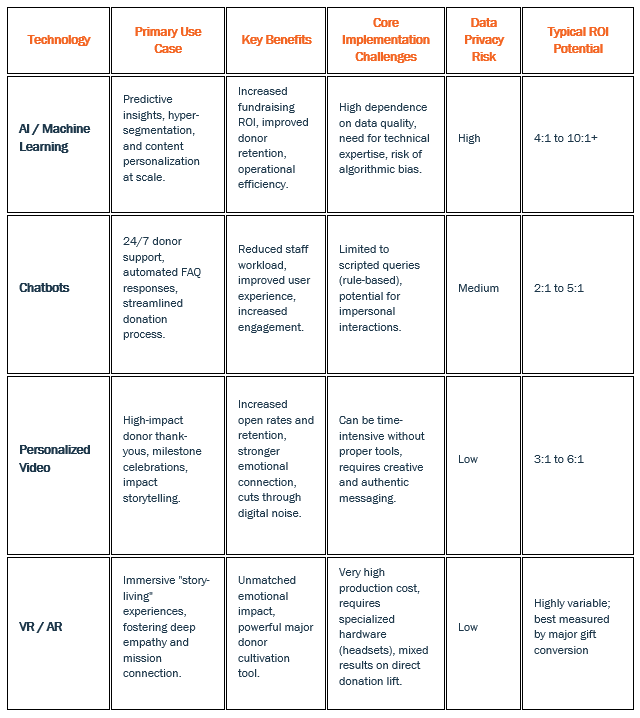
Conclusion: The Future of Donor Recognition in an AI-Enabled World
The landscape of philanthropy is being reshaped by a wave of technological innovation that is redefining the very nature of donor recognition and stewardship. The analysis presented in this report demonstrates a clear and decisive shift away from the static, one-size-fits-all acknowledgments of the past toward a future defined by dynamic, deeply personal, and continuous engagement. This transformation is not an incremental change but a fundamental re-architecting of how nonprofits build and sustain relationships with their supporters.
Synthesis of Key Transformations
The evidence points to several fundamental shifts that characterize this new era. First is the move from public to personal recognition, where the emphasis is less on the public status conferred by a name on a wall and more on the private, emotional connection forged through a personalized video or a data-informed message. Second is the transition from reactive to proactive stewardship, where AI-powered predictive models allow organizations to anticipate donor needs and behaviors — identifying at-risk supporters before they lapse and promising prospects before they are asked — rather than simply reacting to past events. Third is the evolution from mass communication to hyper-personalization, where AI enables the segmentation and targeting of donors with a level of granularity that makes every communication feel relevant and tailored. Finally, we are witnessing a leap from storytelling to "story-living," where immersive technologies like VR are closing the distance between the donor and the cause, creating an unparalleled sense of presence and empathy.
Future Trajectory: The Untapped Potential
While the adoption of these technologies is growing, the sector is still in the early stages of this revolution. Current industry data reveals a significant gap between interest in AI and its strategic implementation. While a majority of nonprofits are exploring AI tools, only 24% have a formal, documented AI strategy in place.[67] This indicates a widespread recognition of AI's potential but a lack of clear frameworks for harnessing it effectively.
The greatest area of untapped potential lies in the realm of predictive analytics. Despite its proven ability to optimize fundraising and improve ROI, only 12.8% of nonprofits are currently leveraging predictive models to inform their strategies.[67] This represents a massive opportunity for growth. As these tools become more accessible and user-friendly, the organizations that successfully integrate data-informed decision-making into their core operations will gain a significant competitive advantage in a crowded funding environment. The future will likely see a rapid acceleration in the adoption of these more sophisticated AI applications, moving beyond content generation to strategic forecasting and optimization.
The Enduring Value of the Human Touch
This report concludes by reinforcing its central thesis: the future of donor stewardship is not one of machines replacing humans, but of humans being empowered by machines. The most successful and sustainable nonprofit organizations will be those that master the "algorithmic handshake"—the seamless integration of technological efficiency and genuine human empathy. Technology can analyze the data, identify the right person to contact, suggest the right time, and even draft the right message. It can handle the scale, the speed, and the complexity that are beyond human capacity.
However, technology cannot replicate the essential elements of a true relationship. It lacks the emotional intelligence to share a moment of authentic connection, the life experience to empathize with a donor's personal story, and the capacity to build the deep, abiding trust that is the foundation of all significant philanthropy.[56] The ultimate goal of these powerful new tools is to automate the mundane so that nonprofit professionals can dedicate more of their time to the meaningful. They can spend less time on data entry and more time on deep conversations. They can spend less time on administrative tasks and more time building the authentic, empathetic, and lasting relationships that inspire generosity and change the world. In the final analysis, the algorithm can open the door, but the human connection is what invites the donor to stay.
Appendix
-
Jones, M. (2023). "Celebrating donor recognition through history and exploring why it works." SOFII.
Saifee Signs. (n.d.). "Revolutionizing Gratitude: The New Era of Donor Recognition in Philanthropy."
Double the Donation. (n.d.). "Donor Recognition: The Ultimate Guide for Nonprofits."
OmniAlly. (n.d.). "Donor Recognition: A Nonprofit's Guide to Showing Gratitude."
NxUnite. (n.d.). "14 Donor Recognition Ideas to Show Your Appreciation."
Guglielmo, S. (2015). "An Evolutionary and Mechanistic Account of the Incidence and Emotional Consequences of Charitable Giving." University of New Mexico.
Pride Philanthropy. (n.d.). "The Evolution of Fundraising: From Traditional Methods to Digital."
Grand River Agency. (2024). "Nonprofit Strategies: AI for Personalized Donor Outreach."
Cloudinary. (n.d.). "Personalized Video: A Guide to Creating Tailored Video Experiences."
Goldsmith, K., & Savary, J. (2021). "New Research Finds Public Recognition Can Decrease Charitable Giving Rates." Vanderbilt University.
Gravyty. (n.d.). "Donor Thank You Videos: Tips & Examples."
CauseVid. (n.d.). "Personalized Video Messaging for Nonprofits."
Neon One. (n.d.). "The Ultimate Donor Stewardship Guide for Nonprofits."
FusionSpan. (n.d.). "5 Donor Stewardship Strategies to Retain Supporters."
Bonterra. (n.d.). "Donor Stewardship: A Guide to Building Stronger Relationships."
Sage. (2024). "Key Findings From the 2024 Nonprofit Technology Trends Report."
Council for Advancement and Support of Education (CASE). (n.d.). "The Donor Cultivation Cycle."
BWF. (n.d.). "Donor Engagement: A Comprehensive Guide."
Fundraise Up. (n.d.). "5 Ways to Drive Donor Engagement With AI for Nonprofits."
DonorSearch. (n.d.). "AI Fundraising: The Ultimate Guide for Nonprofits."
Medium. (2024). "How AI Is Transforming Nonprofit Communications."
Dataro. (n.d.). "Artificial Intelligence for Nonprofits: The Complete Explainer."
Grand River Agency. (2024). "Nonprofit Strategies: AI for Personalized Donor Outreach."
Dataro. (n.d.). "How to Calculate Fundraising ROI: A Quick Guide for Nonprofits."
Medium. (2024). "How AI Is Transforming Nonprofit Communications."
NxUnite. (n.d.). "14 Donor Recognition Ideas to Show Your Appreciation."
CCS Fundraising. (2024). "Revolutionizing Fundraising Part II: 5 Nonprofit Sector AI Application Examples."
Soukup Strategic Solutions. (n.d.). "How Nonprofits Use AI to Measure Impact."
Athey, S., et al. (2022). "New Research Could Help Nonprofits Attract Millions of Online Donors." Stanford Graduate School of Business.
Data Sentinel. (n.d.). "The Unique Challenges Charities and Nonprofits Face in Governing Donor Data."
Pratt, L. (2023). "How charities are using AI to support fundraising." Cause4.
Social Targeter. (n.d.). "Case Studies on the Use of AI in Nonprofit Organizations for Fundraising Efforts."
Charity Digital. (n.d.). "How charities are using chatbots."
Elevation. (n.d.). "AI Chatbots for Nonprofits: Improving Donor and Volunteer Engagement."
Help You Sponsor. (n.d.). "The Ultimate Guide to Chatbots for Donor Engagement."
Auralis. (n.d.). "AI Chatbots for Nonprofit Donor & Volunteer Engagement."
MoldStud. (n.d.). "How Non-Profits Use Chatbots to Boost Donor Engagement."
Social Targeter. (n.d.). "Case Studies on the Use of AI in Nonprofit Organizations for Fundraising Efforts."
Pratt, L. (2023). "How charities are using AI to support fundraising." Cause4.
Medium. (2024). "3 Success Stories: How Nonprofits Boosted Engagement with AI Chatbots."
SAP. (n.d.). "How Nonprofits Use AI to Find and Keep Good Donors."
ThankView. (n.d.). "Personalized Video Message Software Platform."
Virtuous. (n.d.). "Personalized Video Messaging: A Guide for Nonprofits."
CauseVid. (n.d.). "Personalized Video Messaging for Nonprofits."
Gravyty. (n.d.). "Fully Customizable Video Fundraising and Engagement Software."
Idomoo. (n.d.). "Personalized Video for Education & Nonprofits."
Pebble Studios. (2017). "Empathy in VR: Transforming the Future of Fundraising."
Tech-Driven Consulting. (n.d.). "Transform Your Fundraising with Virtual Reality."
Adjerid, I., et al. (2023). "Virtual Reality for Philanthropy: A Promising Tool to Innovate Fundraising." Cambridge University Press.
Gugenishvili, T., & Nyström, T. (2022). "The Effect of Virtual Reality on Empathy and Charitable Giving."
Gugenishvili, T., & Nyström, T. (2022). "The Effect of Virtual Reality on Empathy and Charitable Giving."
Schlosser, A. E., & Van Dolen, W. (2021). "Does a Virtual Reality Appeal Generate More Donations Than a Video Appeal?"
The NonProfit Times. (2016). "Charity: Water Spends $100K On Virtual Reality Film."
Collab with Kat. (2025). "Should Your Nonprofit Use AI?"
Butter Braid. (n.d.). "AI in Fundraising: Pros and Cons."
The NonProfit Times. (n.d.). "AI & Donor Relationships — The Good And The Bad."
Skills for Good. (n.d.). "Why Nonprofits Should Get Ready for Data Privacy & AI Compliance."
BDO. (n.d.). "The Top AI Risks in the Nonprofit Sector."
CRI. (2025). "Beyond Compliance: Prioritizing Donor Data Privacy in the Non-Profit Sector."
The NonProfit Times. (n.d.). "AI & Donor Relationships — The Good And The Bad."
SAP. (n.d.). "How Nonprofits Use AI to Find and Keep Good Donors."
Sage. (n.d.). "Measuring ROI for Nonprofits: Quantifying the Impact of Technology."
RallyUp. (n.d.). "Fundraising ROI: How to Calculate and Maximize Your Return."
Touchstone. (n.d.). "Top 10 Virtual Donor Engagement Strategies."
CFO Selections. (n.d.). "Calculating Nonprofit ROI."
Good360. (n.d.). "How Nonprofits Can Use AI to Increase Fundraising and Engagement."
Nonprofit PRO. (2025). "2025 AI Benchmark Report: How Artificial Intelligence Is Changing the Nonprofit Sector."
This report was aided by Google Gemini.